
Every executive says the same thing about hiring right now: “we’re being cautious.” Slow to open new reqs. Careful about approvals. Deliberate. Or so they think.
Because the data says something different is actually happening. Companies aren’t being cautious. They’re being reactive. And reactivity is the most expensive way to build a workforce.
The contradiction hiding inside your workforce numbers
Robert Half’s 2027 Technology Salary research surfaces a contradiction most executives haven’t seen laid out clearly.
72% of technology leaders report skills gaps on their teams. 77% say the impact has gotten worse, not better. And 65% are actively offering salaries above their planned range to secure candidates with scarce skills.
That data is tech-focused because Robert Half’s survey targeted technology leaders. But the pattern applies to any industry where specialized skills matter and hiring managers are competing for a limited pool: engineering, project management, operations, manufacturing leadership, R&D. Different roles, same dynamic.
Two-thirds of companies telling themselves they’re being disciplined about hiring are simultaneously paying premium prices for scarce talent. That’s not caution. Caution would mean patient, planned, and disciplined. What’s actually happening is desperate, reactive, and premium-priced. The story executives are telling themselves doesn’t match what the data shows they’re doing. It also sits on top of a labor market that looks calm and behaves rigidly, which makes the scarce candidates even harder to reach.
The reframe: cautious hiring versus reactive hiring
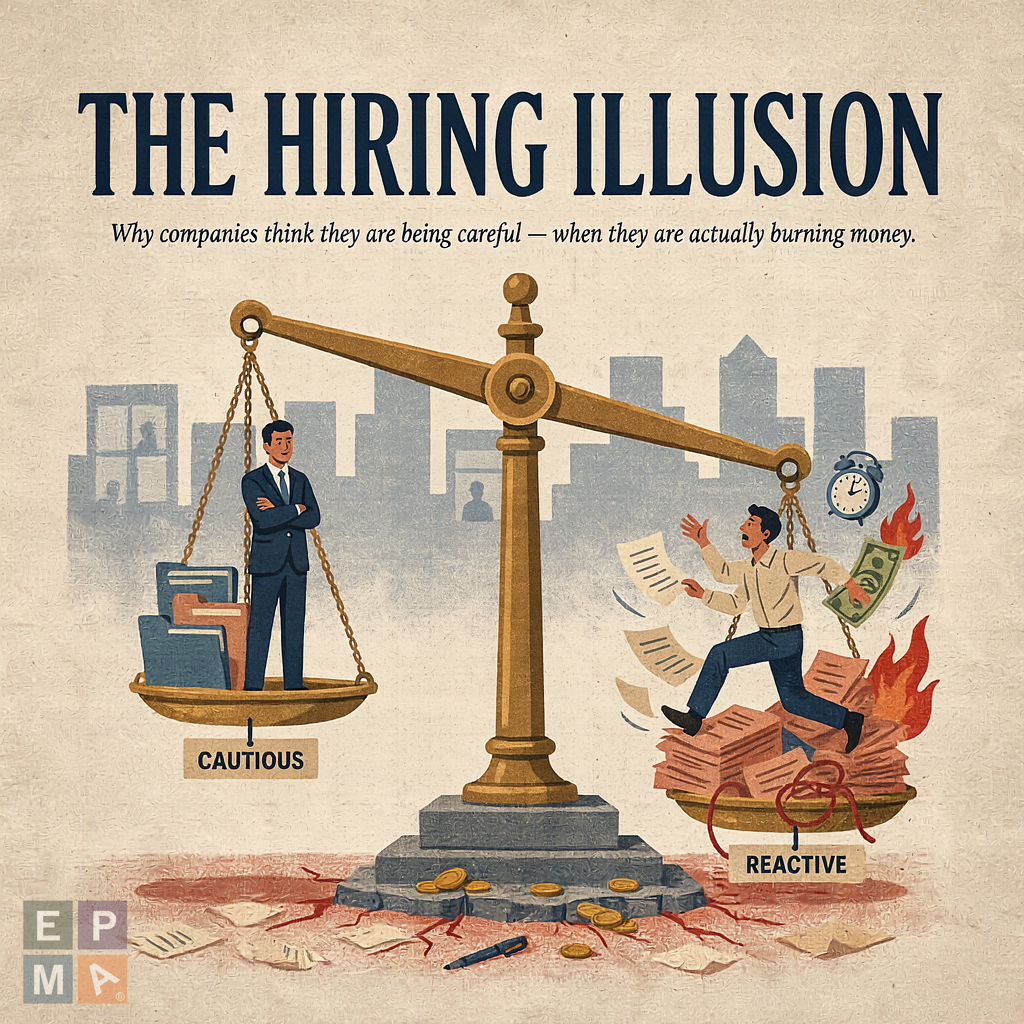
Cautious hiring is disciplined. Reactive hiring is desperate. The two look similar on the surface (both involve slow decisions and heavy scrutiny) but they produce completely different outcomes for the business.
Cautious hiring is what happens when a company has clear workforce planning, defined pipelines for critical roles, and the discipline to say no to hires that don’t fit the strategy. Reactive hiring is what happens when a critical gap becomes urgent, the plan for filling it doesn’t exist yet, and leadership has to make expensive decisions in compressed timelines just to keep the operation running.
Most mid-market companies are doing the second thing and calling it the first.
What reactive hiring actually looks like
The pattern shows up consistently across companies that mistake reactive hiring for cautious hiring.
- Waiting until the gap is critical before starting the search. The role that was foreseeable six months ago becomes an emergency. Which means the search runs under time pressure that removes most of your leverage as an employer.
- Paying whatever it takes because “we need this now.” The 65% who are exceeding their planned salary range aren’t doing it as a strategy. They’re doing it because they’re out of time and out of alternatives.
- Compressing the vetting process because urgency compresses everything. Fewer reference checks. Shorter interview loops. Skipped skills validation. The vetting steps that would catch a bad hire get sacrificed to speed.
- Making hires that fill immediate need but don’t fit long-term. The candidate who’s available now becomes the hire. Not necessarily the one who’d have been right for where the company is going.
- Not thinking about the pipeline for the next critical hire while dealing with this one. All the leadership attention goes to closing the current gap. The next foreseeable gap gets no planning, which guarantees the next reactive cycle.
The costs most companies aren’t measuring
The salary premium is the visible cost of reactive hiring. It’s also the smallest one.
Premium salaries create internal equity issues that surface within months. The new hire at 25% above your planned range signals to existing team members that the fastest path to a raise is a competing offer, which triggers retention conversations you weren’t planning to have.
Rushed hires have higher turnover. When the vetting process gets compressed, the fit assessment gets compressed. Which means a percentage of your reactive hires leave within 12 to 18 months and the search starts over. Each reactive cycle is more expensive than the last because the underlying planning problem never got solved. The compressed timeline also collides with an internal process that was already too slow, which is how urgent searches still lose their first-choice candidate.
Consulting and vendor spend increases to backfill the gap. Every day the critical role sits open, the work is either not happening or is happening through more expensive channels. Consultants, contractors, temporary vendor arrangements. Costs that don’t show up in your hiring budget but absolutely show up in your P&L.
The underlying workforce planning problem never gets solved. Because leadership attention is consumed by the current emergency, the next foreseeable gap goes unaddressed. Which becomes the next emergency. Which triggers the next reactive cycle. Reactive hiring compounds the way debt compounds.
What proactive workforce planning actually looks like
Proactive workforce planning isn’t harder than reactive hiring. It’s just structured differently, and it happens earlier.
- Identify critical roles and pipeline needs 6 to 12 months out, not weeks. Which roles are you likely to need in 2027? Which of your current team members are flight risks? Which capabilities does your growth plan require that you don’t have yet? Answer these before the gap becomes urgent.
- Build relationships with candidates before you need them. The best hires often come from people who weren’t actively looking when you first talked to them. Those relationships take months to develop. Reactive hiring skips this step and pays for it in salary premiums.
- Invest in the specific skills market before scarcity peaks. If you know a specific skill will be critical in 18 months, invest in it now. Training programs, adjacent hires who can grow into the role, partnerships with universities or specialized firms. The proactive investment costs a fraction of what the reactive hire will.
- Balance internal development with external hiring. Most companies default to “hire someone who already has the skill” because it feels faster. Sometimes internal development is faster, cheaper, and produces better retention. Sometimes it isn’t. Making the choice deliberately requires knowing what your pipeline actually looks like.
- Make hiring one part of a workforce strategy, not the whole strategy. The best workforce planning combines hiring, internal development, retention investment, and structured use of contract talent. Companies that rely on hiring alone tend to be the ones stuck in reactive cycles.
Why companies stay reactive
The math favors proactive planning by a wide margin. So why do so many companies keep operating reactively?
It’s easier to react to a gap than to invest in preventing one. Reactive hiring feels urgent, which feels like decisive leadership. Proactive planning feels indulgent, which feels like overhead. The incentive structures in most companies reward visible response to visible problems, not invisible prevention of foreseeable ones.
There’s also a specific dynamic in mid-market operations that reinforces reactivity. Larger enterprises can absorb reactive hiring premiums because their overall talent budget is huge and one bad hire doesn’t move the needle. Mid-market operations feel every reactive hire because each one is a bigger percentage of the total spend. Which means the reactive-versus-proactive gap matters more here than most workforce content acknowledges.
The bottom line for hiring in 2026
You’re not being cautious. You’re being reactive. And reactivity is the most expensive way to build a workforce.
The companies that figure out the difference in the next 18 months are the ones that will still be executable when their competitors are burning cash on emergency hires, watching their top people leave for competing offers, and starting the same reactive cycle over again.
Paying premium for scarce skills more often than you’d like?
EPMA partners with executives running project-driven operations to bring market intelligence into hiring decisions and find the right people before the gap becomes urgent.
If your organization keeps exceeding planned salary ranges and calling it disciplined hiring, we can help you see what the market is actually doing.
Frequently Asked Questions
What’s the difference between cautious hiring and reactive hiring?
Cautious hiring is disciplined. Reactive hiring is desperate. Cautious hiring is what happens when a company has clear workforce planning, defined pipelines for critical roles, and the discipline to say no to hires that don’t fit the strategy. Reactive hiring is what happens when a critical gap becomes urgent, the plan for filling it doesn’t exist, and leadership has to make expensive decisions in compressed timelines just to keep the operation running. The two look similar on the surface and produce very different outcomes.
Why do companies pay above their planned salary range?
Because they’re out of time and out of alternatives. Robert Half’s 2027 Technology Salary research found 65% of technology leaders are offering salaries above their planned range, citing the need to secure candidates with specialized skills. That’s not a hiring strategy. It’s a symptom of reactive workforce planning. The role became urgent before a pipeline for it existed, and the salary premium is what it costs to close the gap on a compressed timeline.
What are the hidden costs of reactive hiring?
The salary premium is the visible cost and the smallest one. Reactive hiring creates internal equity issues (existing team members notice new hires above range), higher turnover (compressed vetting produces worse fit), increased consulting and vendor spend to cover the gap while the search runs, and an ongoing failure to solve the underlying workforce planning problem. Each reactive cycle costs more than the last.
What does proactive workforce planning actually look like?
Five practices consistently distinguish proactive workforce planning from reactive hiring: identifying critical roles and pipeline needs 6 to 12 months in advance, building relationships with candidates before you need them, investing in specific skills markets before scarcity peaks, balancing internal development with external hiring deliberately, and treating hiring as one part of a broader workforce strategy rather than the whole strategy.
Why is reactive hiring more expensive for mid-market companies?
Larger enterprises can absorb reactive hiring premiums because their overall talent budget is large enough that individual reactive hires don’t materially move the P&L. Mid-market operations feel every reactive hire because each one is a bigger percentage of the total spend. The reactive-versus-proactive gap therefore matters more for mid-market companies than for enterprises.
How do we know if our hiring is reactive or cautious?
Two questions surface the answer. First: are you consistently paying above your planned salary range to secure hires? If yes, you’re likely reactive. Second: could you name the three most critical hires your organization will need in the next 12 months, along with a pipeline strategy for each? If not, you’re operating without the planning structure that would make cautious hiring possible.
EPMA is a project management consulting, staffing, and technology firm serving executives, PMO leaders, and mid-market operations leaders across energy, infrastructure, engineering and manufacturing, technology, and professional services. With over 17 years of history in project and portfolio management, EPMA helps clients design governance, measurement, and delivery infrastructure that turns strategy into provable business outcomes.
Sources
Robert Half, 2027 Technology Salary Research (skills gap and salary premium data)