
Part 2 of the “Beyond the Tool” Series
You don’t build trust by handing someone a finished product and telling them to use it. You build trust, and adoption, by letting them help shape it.
When it comes to technology implementations, early stakeholder engagement isn’t optional, it’s non-negotiable. Too many rollouts skip this step. They treat the tool as the destination instead of the journey. And what happens? People feel left out. Misunderstood. Resistant. Then six months later, the same company is wondering why no one’s logging in.
When organizations prioritize early stakeholder involvement, they’re not just improving the tool’s design—they’re laying the groundwork for successful adoption long before the launch date.
The Quiet Cost of Skipping Engagement
We’ve seen it play out so many times:
- A tool is selected and configured behind closed doors.
- End users are given “training” a few weeks before launch
- The system goes live with little fanfare and lots of friction
- Leadership wonders why adoption lags
The truth? Most people don’t reject the tool, they reject how it was handed to them. They don’t see themselves in it. Their workflows weren’t considered. Their needs weren’t heard. Their concerns were never asked.
So they go back to what they trust: Spreadsheets. Email. Shadow systems. And suddenly the “solution” becomes just another silo.
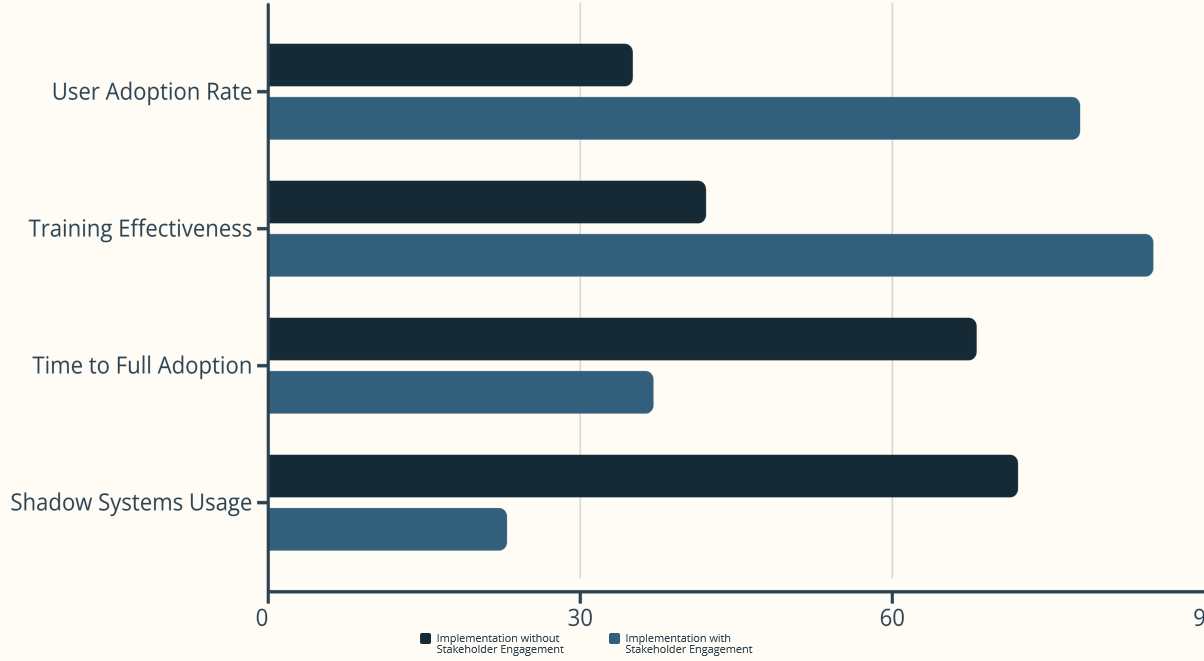
The hidden costs compound: reduced productivity, decreased data quality, more support tickets, and eventually, tool abandonment.
The Power of Co-Creation
Co-creation isn’t just a nice idea, it’s a proven implementation strategy. When people help shape the system, they support it, promote it, and actually use it.
When stakeholders are involved early:
– They feel ownership over the outcome
– They advocate for the tool, not against it
– They shift from reluctant users to invested champions
They don’t feel like change is being done *to* them. They feel like it’s happening *with* them.
Here’s what that process can look like:
- Gather Input: Interview users from various roles to understand real needs, frustrations, and goals
- Collaborative Design: Invite users into the design phase so workflows reflect actual day-to-day use
- Iterative Testing: Allow teams to test early versions and provide feedback that shapes the next iteration
- Champion Development: Empower early participants to serve as internal advocates and peer trainers

Real-World Reminder: Re-Implementations Are Expensive
We once supported a company that had to completely re-implement their tool, after investing hundreds of thousands of dollars in the first version.
Why? Because one executive had made all the decisions without consulting the departments who would actually use it. The system didn’t reflect how people worked. It wasn’t wrong… but it wasn’t right for them.
The Cost of Getting It Wrong
A failed implementation doesn’t just waste the initial investment. It creates organizational fatigue, damages credibility for future initiatives, and extends the opportunity cost of not having effective systems in place.
The second time around, we:
Interview key stakeholders from every business unit: We conducted structured interviews with representatives from all departments, identifying unique workflows and requirements that had been overlooked.
Identify patterns, edge cases, and power users: Through data analysis and observation, we mapped common use patterns while also documenting critical edge cases that required special attention.
Bring champions into early testing: We identified influential users from each department and involved them in early prototype testing, incorporating their feedback into subsequent iterations.
Build out workflows that reflected real-world usage: Rather than forcing users to adapt to the system, we configured the tool to support existing workflows while gradually introducing efficiencies.
Same software. Different outcome. Because the people were finally in the room.
This real-world example illustrates a critical truth: The cost of re-implementation far exceeds the investment required for proper stakeholder engagement. What might seem like an unnecessary delay in the initial rollout is actually an essential investment in long-term success.
How to Engage Stakeholders the Right Way
You don’t need a massive task force. But you do need strategic inclusion.
**Try this:**
- Host cross-functional workshops and discovery sessions: Bring representatives from each affected team into early discovery conversations. Listen more than you speak. Document patterns and unique requirements that emerge across departments.
- Use short surveys to identify patterns and gaps: Especially useful for larger organizations. Ask what’s working, what’s not, and what people wish existed. Combine quantitative data with qualitative insights to build a complete picture.
- Start with a pilot group and iterate: Start small with a few champions, refine the system based on their feedback, and then scale gradually. This creates a core group of experienced users who can help others.
- Build regular feedback loops into your design process: Build in checkpoints during design, not after it’s “done.” Regular touchpoints ensure development stays aligned with user needs and expectations.
The goal isn’t to slow things down. It’s to build alignment while you build the system, so when you launch, adoption feels natural, not forced. Effective stakeholder engagement requires thoughtful planning and genuine openness to input. The investment in time upfront dramatically reduces resistance later and creates a foundation for sustainable adoption. When stakeholders feel their voices matter, they become partners in the implementation rather than subjects of it.
Who Are Your Hidden Influencers?
Don’t just involve executives. Find the informal leaders:
– The ones everyone turns to for help
– The people who understand both process and culture
– The voices that shape team decisions, even without a title
These internal influencers can make or break adoption. If you bring them in early, they’ll become your biggest advocates. Ignore them, and they might become quiet blockers.
Case Example: The Project Coordinator Effect
In one global manufacturing company, we discovered that project coordinators, not department heads, held enormous influence over how systems were actually used. By engaging this group early in the design process, adoption among department leadership increased by 87%, creating a ripple effect throughout the organization.
Remember that organizational charts rarely reflect actual influence networks. The most powerful champions often emerge from unexpected places within your organization. By taking the time to identify and meaningfully engage these hidden influencers, you leverage existing social dynamics to accelerate adoption and overcome resistance.
Key Takeaways
Early Engagement is Critical
Stakeholder engagement must happen before design, not after. Including users from the beginning creates psychological ownership and reduces resistance.
Ownership Drives Adoption
Inclusion builds ownership, which drives adoption. When people feel their input matters, they become champions rather than resistors.
Co-Creation Prevents Rework
Co-creation prevents expensive rework and reduces resistance. Getting it right the first time is always less costly than re-implementation.
Identify Champions Early
Internal champions should be identified early and empowered. Look beyond titles to find the real influencers in your organization.
Real-World Usage Must Shape Design
Real-world usage must shape the tool, not just executive vision. The most elegant solution is worthless if it doesn’t align with how people actually work.
“The most successful technology implementations are those where users can’t imagine going back to the old way of working—not because they’re forced to use the new system, but because they helped build something that truly works better for them.”
Effective stakeholder engagement requires investment of time and resources upfront, but this investment pays enormous dividends in faster adoption, reduced resistance, and ultimately, greater return on your technology investment. By making engagement a non-negotiable part of your implementation strategy, you transform the entire change experience from one of imposition to one of collaboration.
In Part 3 of this series, we’ll explore “The KPI No One Tracks: Deliverables” — and why measuring outcomes, not just financials, is the key to project success.
Read Part 1 Here: Culture Eats Software for Breakfast