
Part 1 of the “Beyond the Tool” Series
You can buy the most powerful, feature-rich project portfolio management (PPM) tool in the world. You can configure it perfectly, align it to every process, and invest in hours of training. And still… it can fail.
– Not because the software was bad.
– Not because the budget was too small.
– But because the organization never embraced it
The Investment Paradox
I call this the investment paradox: Organizations pour time, money, and energy into powerful tools, only to watch them collect dust.
The problem? Technology can only amplify the culture it’s dropped into — it can’t fix a broken one. If the culture resists change, the most sophisticated software in the world will quietly die on the shelf.
And the cost is more than just wasted licensing fees:
Failed rollouts erode trust in leadership.
Change fatigue grows (“Here we go again…”).
Future initiatives face skepticism before they even start.
The lesson is clear: before you implement a tool, you have to prepare the soil it’s going to grow in.
The Hard Truth: Culture Determines Adoption
I’ve seen it time and time again: leaders assume that once a new tool is rolled out, people will naturally use it.
“If we build it, they will come.” But without cultural alignment — across leadership, middle management, and frontline teams, even the smartest tool becomes shelfware.
Why adoption fails:
Exclusion from decision-making: When people aren’t part of the selection or design process, they don’t feel ownership.
Distrust of process or data: If the workflows or numbers aren’t trusted, users will work around the system.
Entrenched habits: Spreadsheets, emails, and hallway conversations are hard to replace without a clear reason and consistent reinforcement.
Culture sets the rules for what behaviors are rewarded, what tools are embraced, and what processes stick. If leaders keep accepting reports via old channels, the unspoken permission to bypass the new tool is already there.
Adoption Starts Before Go-Live
The most successful implementations start the adoption journey months before launch. It’s not something you can “switch on” with training the week before go-live.
Here’s what works:
Engage stakeholders early. Bring in representatives from all impacted groups during requirements and design. Let them shape the tool so they see themselves in it.
Build change champions. Identify early adopters who will advocate for the system and help peers get comfortable.
Clarify the “why.” Everyone should understand how the tool makes their work easier — not just the company’s work.
When people see their fingerprints on the solution, they move from reluctant participants to active champions.
A Real-World Cautionary Tale
Two years ago, I witnessed a major organization implement a project management tool without engaging the people who would actually use it. One leader made all the configuration decisions alone.
The result? On launch day, the pushback was immediate:
“This isn’t how I work.”
“You forgot about my project type.”
“This doesn’t meet our needs.”
Within months, usage dropped, parallel processes reappeared, and the organization had to fund a complete re-implementation, almost doubling costs and delaying benefits by over a year.
The second attempt used the exact same software, but this time, they engaged stakeholders from every functional area, conducted real user testing, and created a network of “super-users” to support adoption.
The difference wasn’t the tool, it was the culture.
Why Culture Matters More Than Configuration
A launch date on the calendar isn’t the finish line, it’s just the beginning. Technical perfection cannot overcome cultural resistance. And even an imperfectly configured tool can thrive in a culture that embraces it.
This chart illustrates what truly drives successful technology adoption — and notice how culture-driven factors outweigh purely technical considerations.
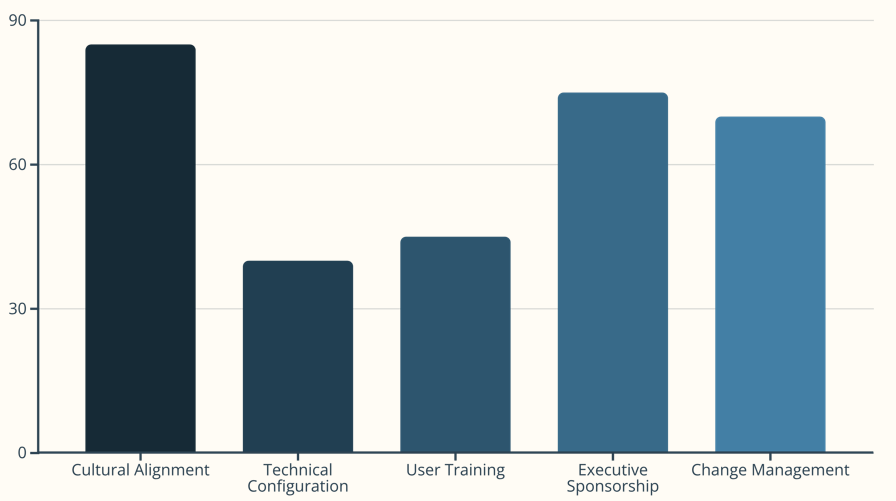
- Cultural Alignment sits at the top because if the organization isn’t aligned on why the tool matters and how it will be used, nothing else sticks.
Executive Sponsorship and Change Management follow closely — leadership must not only approve the tool but actively model and reinforce its use, while structured change management helps overcome natural resistance.
Technical Configuration and User Training, while important, have far less impact if the cultural foundation isn’t there.
What makes adoption stick:
Leadership modeling
Leaders must visibly use the tool and refuse workarounds.
Accountability
Usage expectations are clear, enforced, and tied to performance.
Celebration
Early wins are shared and credited to the team’s use of the tool.
Continuous learning
Training is ongoing, not a one-time event.
When these cultural elements are in place, using the tool becomes “just how we work.”
Cultural Readiness Assessment
Before you choose your next tool, ask the harder questions about your organization’s culture:
Leadership Alignment
Are leaders willing to both use the tool and enforce adoption?
Change History
How have past rollouts gone? Is there “scar tissue” from failed implementations?
Process Maturity
Are workflows clearly defined and followed, or does everyone operate differently?
Organizational Trust
Do teams believe leadership invests in tools that make their jobs better, or just management’s job easier?
A simple, honest readiness assessment can save you from investing in technology your culture isn’t prepared to adopt.
Key Takeaways
• Adoption is a cultural challenge first, a technical challenge second
• Engage stakeholders early to build ownership
• Leaders must model the change they expect
• Clear purpose (“why”) is essential for adoption
• Assess cultural readiness before you buy or build
Next in the Series:
In Part 2, we’ll explore how early stakeholder engagement prevents costly rework and accelerates adoption with practical steps to build your change champions from day one.
Ready to turn your PPM tool into a true engine for delivery? Let’s talk about building the cultural foundation your implementation needs to succeed.